Welcome to the official website of Nanbei Group




 008615890068607
008615890068607
008615890068607

Ultra-low temperature freezers can be used for scientific research, low-temperature testing of special materials, cryopreservation of biological products, ocean-going products, electronic components, and are suitable for various fields such as blood banks, hospitals, scientific research and technology, the electronics industry, university laboratories, and ocean shipping companies.
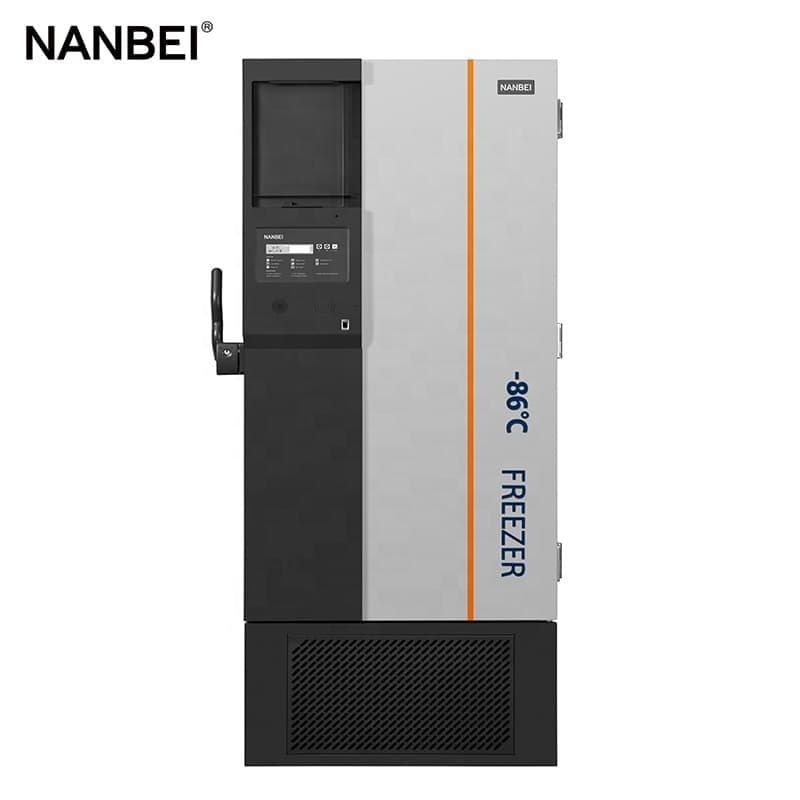
When the cooling effect of an ultra-low temperature refrigerator decreases, a multimeter can be used to measure the freezer's leakage current, and a segmented inspection method can be used. When the high-temperature compressor is powered on separately, check whether the entire freezer is electrified due to leakage in that compressor. Perform static testing on the compressor terminals, paying close attention to the lead plug section inside the motor windings. If there are traces of arcing between the lead plug and the casing, it indicates a leakage current.
The method involves replacing the terminal block along with a portion of the surrounding housing. After reinstalling the unit, power it on and run it to check for any leakage. Once all compressor parameters are normal, reinstall it on the base of the low-temperature refrigerator, connect the pipes, check for leaks, evacuate the system, and charge an appropriate amount of refrigerant to restore the refrigerator to normal operation.
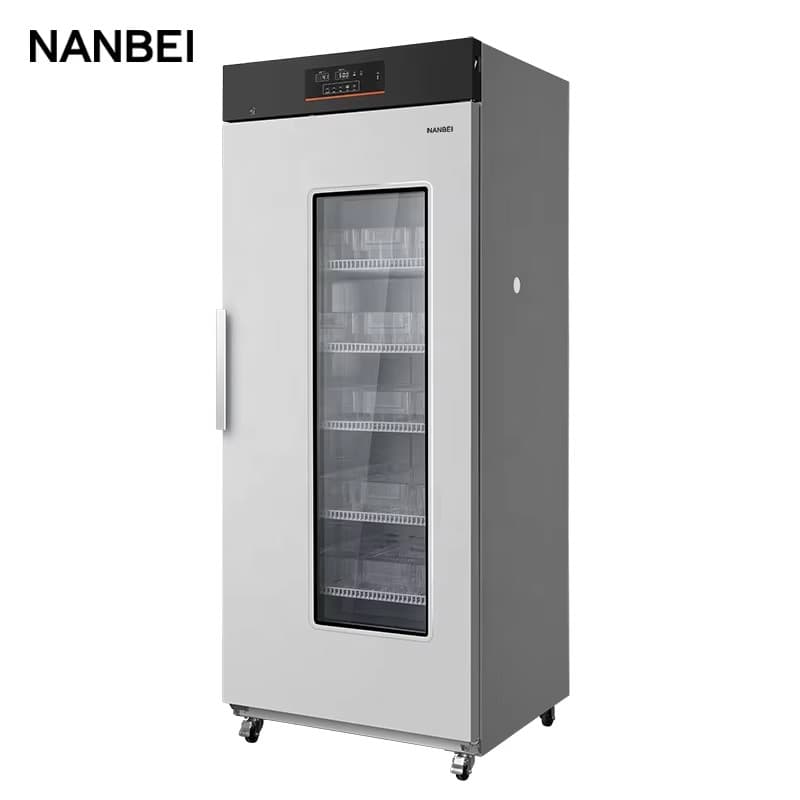
NANBEI INSTRUMENT---The Professional Expertise Behind Laboratories, The Preferred Global Supplier of Laboratory Instruments
We makes product design grounded in real experimental needs based on laboratories to provides practical and effective instrument solutions.
Previous: No Information
Next: The FAI climbed 5.9 percent year-on-year in the first 11

 nanbeiinstrument@nanbei-china.com
 008615890068607
 Add: No. 72, Beihuan Road, Jinshui District, Zhengzhou,China
Navigation
QR Code

Copyright © NANBEI INSTRUMENT LIMITED