Welcome to the official website of Nanbei Group




 008615890068607
008615890068607
008615890068607

Laboratory ultra-low temperature freezers can store or freeze items at extremely low temperatures, typically below -80 degrees Celsius. They have wide applications in medicine, biology, food, materials, and other fields.
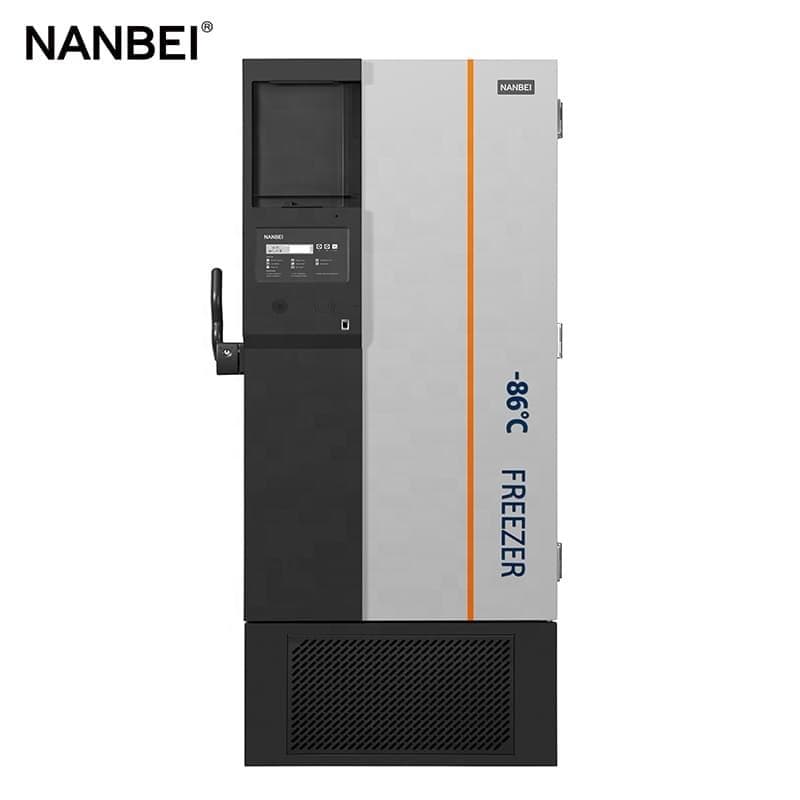
What components of ultra-low temperature freezer should be maintained?
1. Clean the machine casing: Every six months
• Precautions: Avoid using excessive water to clean the control panel area to prevent electrical leakage and damage to circuit components.
2. Clean the freezer's operating environment: Monthly
• Clean up all debris and dust on the floor to reduce dust accumulation in the compressor and refrigeration system, which can affect heat dissipation.
• Prevent dust from accumulating on the circuit boards, which can cause interference and damage to circuit components.
3. Door seal sealing test: Every six months
• Poor sealing can increase compressor operating time and cause compressor malfunction.
4. Clean the air filter: At least four times a year
• If it is very dirty and dust and debris cannot be removed, the filter needs to be replaced.
5. Clean the condenser: At least twice a year
• Precautions: Depending on the environment of different laboratories, the condenser may need to be cleaned multiple times a year. During cleaning, do not damage the heat sink fins on the condenser.
6. Internal defrosting: once a year or when the frost thickness exceeds 10mm; external door sealing strip defrosting: good sealing performance ensures effective sample protection.
7. Cleaning of the vacuum pressure balance port.
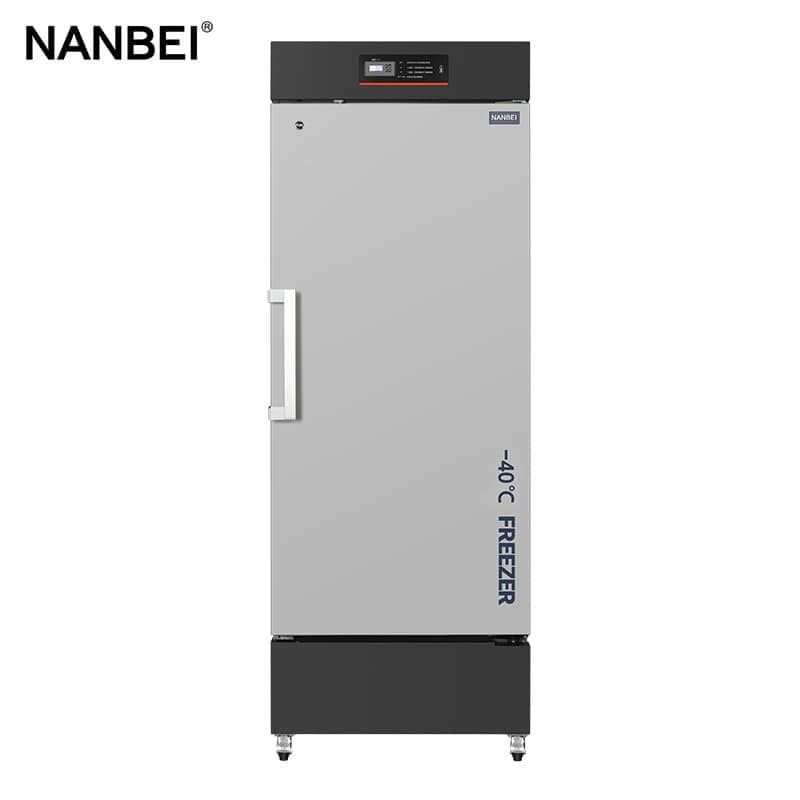
-40, -60, and -86°C ultra-low temperature freezers are suitable for low-temperature testing of electronic devices, special materials and preservation of plasma, biological materials, vaccines, reagents, etc. Extremely low temperature freezers are also available at -120°C, -135°C, -160°C, and -192°C.
Previous: No Information
Next: The FAI climbed 5.9 percent year-on-year in the first 11

 nanbeiinstrument@nanbei-china.com
 008615890068607
 Add: No. 72, Beihuan Road, Jinshui District, Zhengzhou,China
Navigation
QR Code

Copyright © NANBEI INSTRUMENT LIMITED